From Stepping Stones to Stories: 120 Years of Korean Americans

Koreans set foot on Hawaiian soil for the first time.

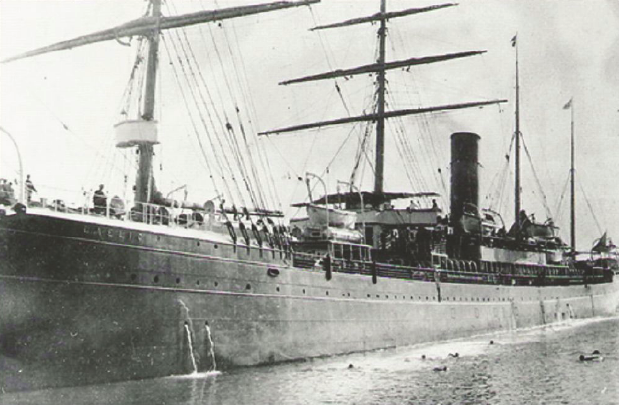
Gaelic

On January 13, 1903, the British ship S.S. Gaelic arrived at Honolulu Harbor, Hawaii, carrying the first group of 102 Korean immigrants.

Article on the arrival of the first Korean immigration group of 102 members in Honolulu.

Arrived on January 13, 1903, by the Gaelic (The Hawaiian Star, 1903/01/13)

Hawaiian Immigrant Passport

A passport issued to those leaving for Hawaii. The passport used by the first Koreans who immigrated to Hawaii in 1903 was an official travel certificate known as a “Jipjo” (집조). This document was issued by the Immigration Bureau established by the Korean Empire to manage overseas immigration. The first group of 102 individuals who possessed this document arrived in Hawaii on January 13, 1903. Subsequently, approximately 7,400 more Koreans immigrated to Hawaii by 1905, most of whom worked as contract laborers on sugarcane farms. The Jipjo served as an important document for proving their identity and facilitating their movement.

Picture Bride & Hawaiian Laborers

Picture Bride

The Picture Bride system began between 1910 and 1924 when approximately 650 Korean women immigrated to Hawaii. They sent photographs to Korean men working on sugarcane plantations, and through the selection process, they would marry, playing a crucial role in the formation and settlement of the Korean community.

Hawaiian Sugarcane Laborers

The first Korean sugarcane laborers immigrated to Hawaii in 1903, consisting of about 1,000 men who primarily engaged in labor related to sugarcane harvesting. They worked long hours, typically 10 to 12 hours a day, for low wages.

Pachappa Camp: Ahn Chang Ho & Riverside Orange Farm

Pachappa Camp

Ahn Chang Ho, who resided in San Francisco, moved to the orange farm in Riverside to find work. With the help of farm owner Cornelius Earl Ramsey, the Korean Labor Bureau was established at 1532 Pachappa Avenue in Riverside, marking the beginning of the Korean immigrants’ settlement. Approximately 200 Koreans eventually settled in the area, and Pachappa Camp became an important space for immigrants to maintain their culture and start a new life.

Dosan Ahn Chang Ho in the 1910s (San Francisco)

Korean independence activist, and an early leader of the Korean-American immigrant community in the United States. He is also commonly referred to by his art name Dosan (도산; 島山; [tosʰan]).

Riverside Orange Farm

Korean immigrants working at an orange farm located in Riverside, California, in the early 1900s. They migrated to the U.S. for a new life and sustained their livelihoods through hard labor on the farm. The Riverside orange farm played a significant role in the settlement of Korean immigrants.

Hastings Military School & Willows Korean Aviation School

Hastings Military School

Ahn Chang-ho, an independence activist and educator, established a military school in Hastings, Nebraska, with the help of the Korean National Association, providing military and general education for Korean immigrants. This school was created to help Korean immigrants successfully adapt to American society and train individuals who would contribute to the independence movement.

Willows Aviation School

The Willows Aviation School was established by Noh Baek-rin and Kim Jong-rim as a Korean aviation school under the Korean provisional government, aiming to provide aviation technology and military training to Korean immigrants. The school was founded on the belief that “the nation that dominates the skies will win,” and these efforts laid the foundation for the current Republic of Korea Air Force.

Korean United Presbyterian Church:
A Center for Faith & Independence

Korean United Presbyterian Church (LA)

The Korean United Presbyterian Church was one of the churches established in the early 1900s with the help of American churches by Korean Americans. Its primary role was to raise funds for the independence movement of their homeland. In particular, the Korean National Association and the Korean United Presbyterian Church shared the same building, further developing the LA downtown area as a center for independence movements in the U.S. This cooperation strengthened the unity of the Korean community and provided a crucial foundation for the independence movement.

Holt Children's Welfare Association

Holt Children's Welfare Association

Holt Children’s Welfare Association was established in 1956 by Harry and Bertha Holt as the number of orphans due to the Korean War and children born to American soldiers in Korea increased. This organization began sending Korean children to the U.S. for adoption, supporting their care in new families. The efforts of the Holt Children’s Welfare Association contributed to providing a stable environment and opportunities for many children.

War Brides

War Brides

After the Korean War, many American soldiers returned to the U.S. with their Korean wives, who are referred to as “war brides.” Between 1950 and 1964, about 45% of the Koreans who immigrated to the U.S., totaling 6,423 individuals, were war brides. These women began new lives due to marriages formed during the war and made significant contributions to American society.

1965 Immigration Act Amendment

President Lyndon B. Johnson signed the Immigration Act

The Immigration Act Amendment of 1965 allowed Koreans who immigrated to the U.S. to invite family members remaining in Korea. As a result, approximately 40% of the Korean immigrants who came to the U.S. in the 1960s and 1970s were family members of war brides. This change provided many Koreans with opportunities for reunion and new beginnings.

LA Riot

Rooftop Koreans

During the 1992 LA riots, as local police withdrew from Koreatown due to the unrest, some Korean Americans took to the rooftops to defend their businesses and community. They became known as the “Rooftop Koreans,” recognized for their brave actions to protect their livelihoods and community. This event has become a significant symbol of unity and survival for the Korean community.

The Rise of the Korean Wave

PSY, BTS, BLACKPINK

The efforts of the ancestors to enable their descendants to dream of a better future have deeply taken root in today’s Korean American community. Using their dedication as a stepping stone, the Korean Wave has emerged with PSY’s “Gangnam Style” and the beginning of LA KCON, and now the popularity of BTS and BLACKPINK has expanded beyond Korea to the whole world.
PSY
BTS
BLACKPINK